
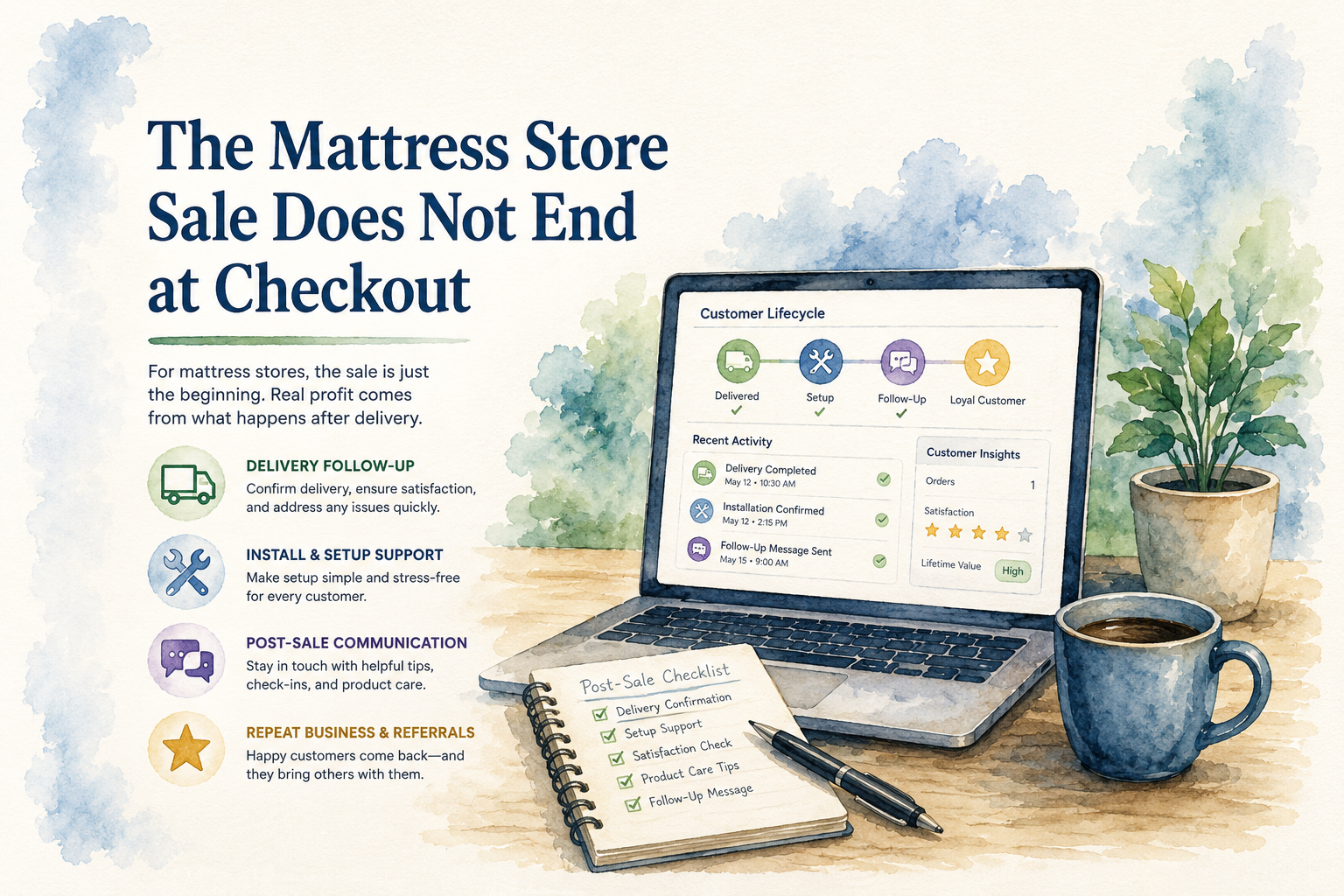
For mattress stores, the sale often feels complete when a bed is selected and financing is approved. In practice, the work that follows checkout can shape how the entire purchase is remembered.
The important work after checkout is coordination. Delivery needs a reliable schedule. Removal or setup details need to be visible. Financing and inventory status need to be clear enough that staff can answer questions without rebuilding the order history from scratch.
This is where many mattress retailers have an operational gap. The sales process may be polished on the floor, while the post-sale process still depends on scattered notes and manager memory. That is not necessarily a failure of effort. It is a sign that the handoff after the sale needs the same operational ownership as the sale itself.
Why Post-Sale Coordination Matters
A mattress purchase is personal, but the fulfillment process is operational. A strong showroom conversation can still be weakened by a missed delivery note, unclear financing status, or a vague callback.
The store does not need a complicated system for every edge case. It needs a reliable way to track what happens after a sale is written, with enough visibility for staff to understand the delivery plan and the next customer update.
When those details are not visible, staff end up reconstructing the order from whatever system or conversation they can find. A salesperson may remember the customer clearly, but not the delivery exception. A warehouse note may exist, but not in the place the front desk checks. A manager may know the financing issue was resolved, but the person answering the phone may not.
The customer usually does not see the internal handoff. They only experience whether the store sounds organized.
The Handoff Between Sales and Delivery
The most important handoff in a mattress store is often the one between the person who sold the bed and the people responsible for getting it into the customer's home.
That handoff should not rely on a verbal reminder at the end of a shift. It should produce a clear internal record that answers a few practical questions. What exactly was purchased? Is the item in stock or expected from a supplier? What delivery day was discussed? Are there access issues at the home? Did the customer request removal of the old mattress? Is financing fully approved, or is something still pending?
Those are ordinary details, but they matter because they change what the next person has to do. If removal was promised but not visible to the delivery team, the delivery experience becomes awkward. If the item is backordered and no one owns the customer update, the store may look inattentive even when the delay is outside its control.
A better handoff is not about adding paperwork. It is about making the required information easy to find before the customer has to ask.
Financing and Special Orders Need Clear Status
Mattress retailers often sell through financing, promotional offers, and special-order inventory. Those tools help close sales, but they add operational steps that need clean tracking.
Financing creates a status question. Was the application approved? Did the customer complete the required documents? Is there a deposit, balance, or condition that must be handled before delivery? If the sales floor knows the answer but the operations side cannot see it, the order can stall quietly.
Special orders create a different kind of status question. The customer may understand that the item is not available today, but they still expect the store to communicate clearly. A rough estimate given during the sale can turn into frustration if there is no follow-up when timing changes.
This is where a simple order-status workflow can help. Each order should have a current status, a next action, and an owner. The status does not need to be complicated. It needs to be visible enough that the store can answer the customer's question without starting over.
Follow-Up Should Be Owned, Not Remembered
Many mattress stores already care about follow-up. The issue is that follow-up often depends on the salesperson, manager, or office staff remembering the right moment.
That becomes fragile when the store is busy. One request may get a good response because the right person remembers it. Another may wait because it is sitting in a thread, note, or voicemail that nobody has converted into owned work.
A reliable follow-up process should make ownership clear. Staff should know who owns the next customer update, when it should happen, and what context is needed before reaching out. Those questions are simple, but they change the workflow. Instead of relying on memory, the store has a queue of customer commitments. Some items may be quick confirmations. Others may need manager review. The point is that each one has an owner and a place to live.
Where IT Support Fits First
Before a mattress store adds automation, the basic technology environment has to be dependable. The store needs counter systems that work and logins the business controls. It also needs protected records and a support path when something breaks.
This matters because post-sale coordination crosses several systems. The sale may be in the POS. Financing may live in a separate portal. Delivery may be tracked somewhere else. Customer communication may happen through phone, email, or text. If access is unclear or devices are unreliable, automation will not fix the core problem.
The practical starting point is to make sure the store's everyday technology has an owner. Staff should know who manages logins, where order documents live, and how to get help when a system blocks customer work.
Once those basics are under control, workflow automation becomes more useful because it is supporting a stable operating environment instead of compensating for a messy one.
Where Automation Can Help Later
Automation can help mattress stores when it keeps post-sale commitments visible. It can create reminders for delivery confirmations, flag orders waiting on financing, and prepare customer update drafts for review.
AI can help with internal summaries when customer communication is scattered. For example, it can turn a call note or email thread into a short internal status update for review. It can also help draft a clear customer message when an order is waiting on supplier timing or a delivery date needs confirmation.
The boundary should be clear. Automation should not invent delivery promises, approve exceptions, or decide how to handle a sensitive customer complaint. It should help staff see what needs attention and prepare cleaner communication for human review.
That is the useful role: fewer missed commitments, less reconstruction, and better visibility into the orders that are not finished yet.
A Practical Starting Point
A good first project is a post-sale order checklist that lives somewhere staff actually use. It should be short enough to survive a busy sales day and clear enough that a manager can review open orders quickly.
The checklist should capture the order status and the next customer update. It should also identify who owns the next step. If the order is waiting on inventory, that should be visible. If a call is needed before delivery, that should be visible too.
The store can start manually before automating anything. For two weeks, track every sold order that is not fully delivered and closed. Look for where staff lose time, where customers call for updates, and where information is hard to find. That review will show whether the next improvement should be IT support, a better order-status view, or a delivery confirmation workflow.
Palmetto Intelligence can help with that kind of practical operating work. The goal is not to replace the sales relationship. It is to make sure the systems behind the sale are reliable enough to support it.
Final Thought
Mattress stores compete on trust and timing. A strong showroom experience matters, but the post-sale process has to carry that trust through delivery and follow-up.
When the handoff after checkout depends on scattered notes and memory, the store creates avoidable friction for staff and customers. A better foundation starts with dependable IT support and clear ownership of post-sale work. From there, automation can help keep delivery and follow-up from slipping through the cracks.