
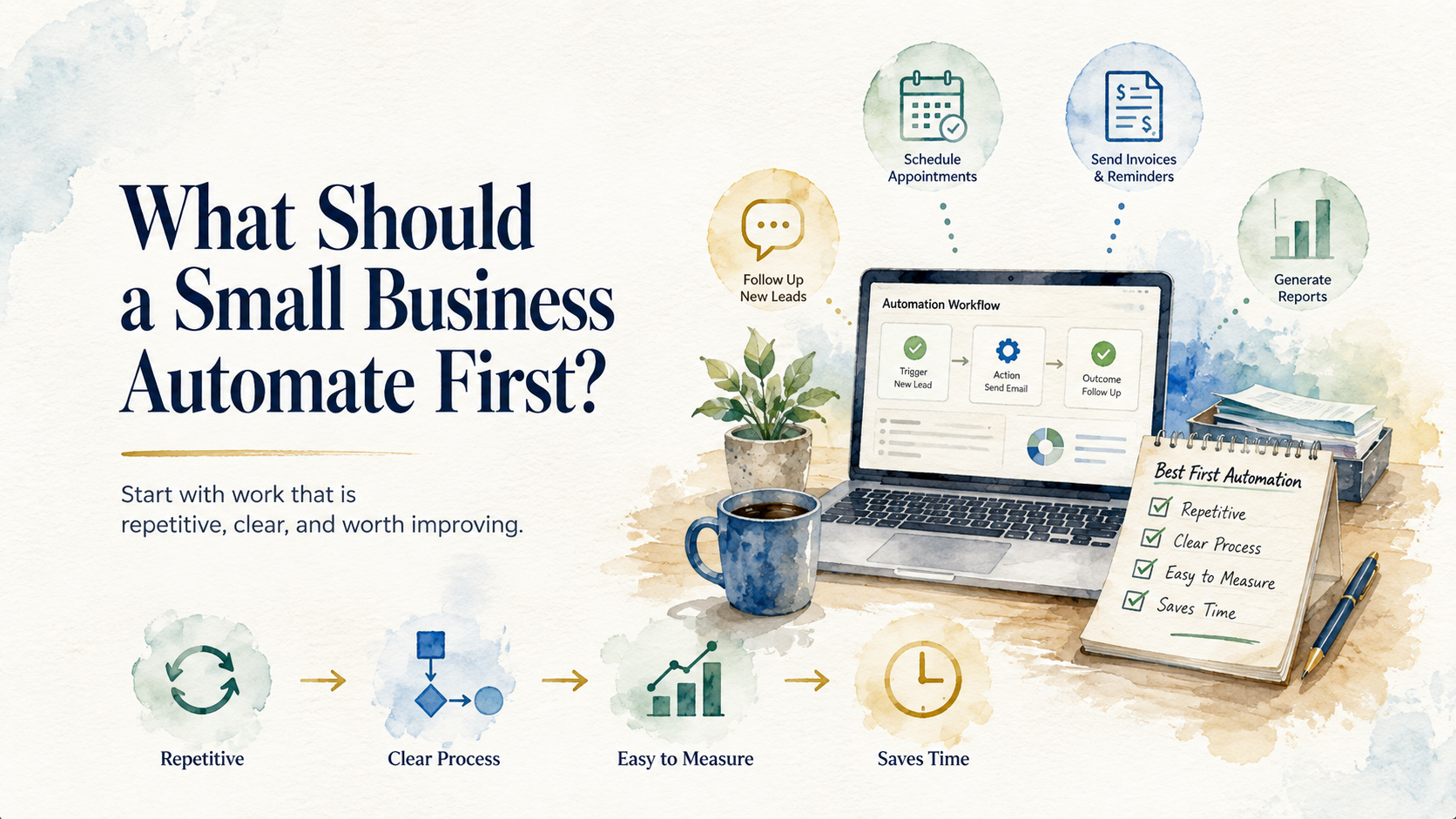
The best first automation is usually a piece of work the business understands well and dislikes doing often.
Frequency alone is insufficient. A task can consume time while hiding so many exceptions that automation turns every unusual case into a support request. The first project should have a visible starting point, a result that can be checked, and enough repetition to reveal whether the change helped.
Choosing well matters because the first project teaches the business how automation will be owned. A useful early win builds confidence and exposes the practical work around permissions and data quality. It also shows how review and maintenance fit into ordinary operations. A poorly chosen project makes the technology look unreliable when the underlying process was never ready.
Start With Friction You Can Count
Begin with work that leaves evidence. You should be able to estimate how often it happens and how long it occupies someone. The business should also know what delay or error looks like.
A weekly job-cost report is a good example. An office manager currently exports labor and material data before matching each record to a job number. After resolving the unmatched items, the manager prepares a summary for the owner. The work follows a recognizable path, and the finished report can be compared with the manual version.
The same report may still contain judgment. A strange material charge or an incomplete technician entry needs investigation. Those exceptions can remain with the office manager while automation handles the routine preparation.
Contrast that with “improve customer service.” The goal is reasonable, but it does not identify a unit of work. The team cannot tell what should trigger the automation or what a correct result would be. Narrowing the goal to routing incoming warranty requests would create something the business can actually inspect.
Score the Work Before You Build
A short evaluation prevents enthusiasm from choosing the project. Rate each candidate on five questions:
- How often does the work occur?
- Can the input be found reliably?
- Can a correct output be described clearly?
- How many cases require judgment?
- What measurable consequence follows from delay or error?
The strongest candidate does not need the highest score in every category. It needs a reasonable balance. High frequency creates value, while clear inputs and outputs keep the first version manageable. A moderate exception rate can be acceptable when the system routes those cases to a person instead of forcing an answer.
Risk changes the order. Automating a weekly internal report is forgiving because a reviewer can catch a mismatch before making a decision. Automatically issuing refunds or changing payroll creates consequences that demand stronger controls. A business can reach those use cases later after it has learned how to test and monitor simpler work.
A Strong First Project Has Boring Boundaries
Good boundaries make the project sound almost unimpressive. When two approved exports arrive, the workflow matches records using the job number and places anything unresolved in an exception list. A draft report should be ready by Wednesday morning.
That description is valuable because each part can be tested. The team knows what data is required and where uncertainty belongs. A missing job number sends the record to the office manager instead of inviting the workflow to invent a match.
This approach also respects the software already in use. The accounting and field-service systems remain the sources of truth while automation prepares the repeated work between them. Reliable accounts and consistent exports matter more than adding an elaborate AI agent.
AI may help when descriptions vary or documents arrive in inconsistent formats. Fixed rules should continue to handle exact matches and deadlines. The first project can use both without making AI the center of the design.
Before launch, run the workflow beside the current process for several cycles. Compare the totals and inspect every exception. A parallel test reveals whether the source exports are as dependable as expected and gives the office manager a chance to challenge the rules before the report influences a decision.
Delay the Work That Hides Judgment
Some tasks look repetitive because the employee has become skilled at making quiet decisions. Pricing a custom job may reuse a template while still depending on site conditions and customer history. Resolving a complaint may follow a routine path until one sentence changes the meaning of the conversation.
Automating these tasks first removes the very judgment that keeps them safe. A better early project can prepare the information and leave the decision with the person who understands the consequence.
The selection also needs an owner. Someone must be able to explain the workflow, approve changes, and notice when its result no longer matches the business. A first project without that responsibility will become fragile even when the technical build is sound.
Palmetto Intelligence starts automation planning by identifying the repeated work, the hidden decisions, and the systems that hold the source data. That assessment produces a smaller first project with a clearer result.
The right first automation should feel useful within ordinary work. It finishes a repeated preparation step, surfaces exceptions, and gives the team better visibility. Once that workflow proves dependable, the business has a sound basis for taking on a harder one.
That progression protects the investment. Each successful project leaves behind cleaner ownership and a better understanding of the company's data. The next automation can start from those gains instead of repeating the same discovery work under a different tool.